
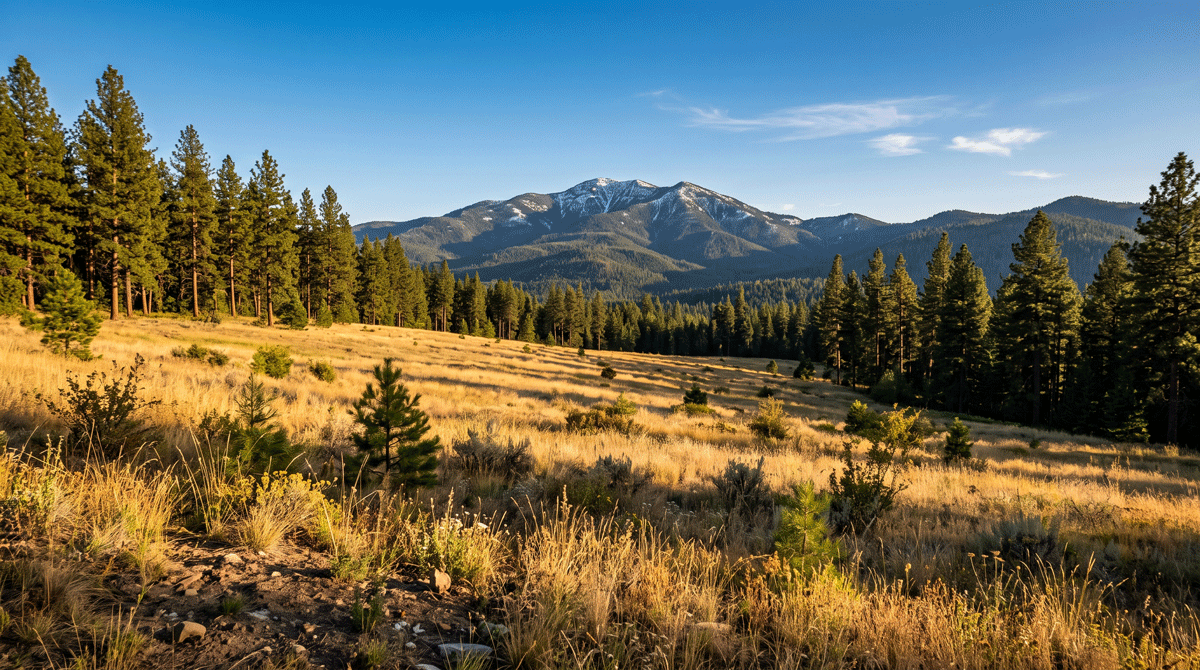
You found the land. Maybe it’s five acres outside Deer Park with a view of Mount Spokane, or a wooded parcel up toward Coeur d’Alene that you’ve been walking for years. Either way, the picture in your head is probably the finished house: the porch, the shop, the kitchen window facing the right direction.
Before you design any of that, the land has to answer some practical questions. Can it handle a septic system? Where does the water come from? Can a concrete truck get up the driveway in April?
Those answers shape where the house sits, how big it can be, and how much site work comes first. Here are the checks that matter most when building on your own land around Spokane and North Idaho, and who you’ll work with to get them done.
Why the Land Comes Before the Floor Plan
It’s tempting to start with house plans. The trouble is that a plan designed without the site in mind often has to be reworked. A septic drainfield might need the exact flat spot where you pictured the house. A setback might push the home back, stretching your driveway and utility runs.
Once you understand the site, the design works with it instead of fighting it. That’s the core idea behind a design-build approach: the people designing the home and the people building it look at the land together, early.
The Site Checks That Matter Most
Every parcel is different, but these items come up again and again on rural and semi-rural land around Spokane, Deer Park, and North Idaho.
Septic and Soils
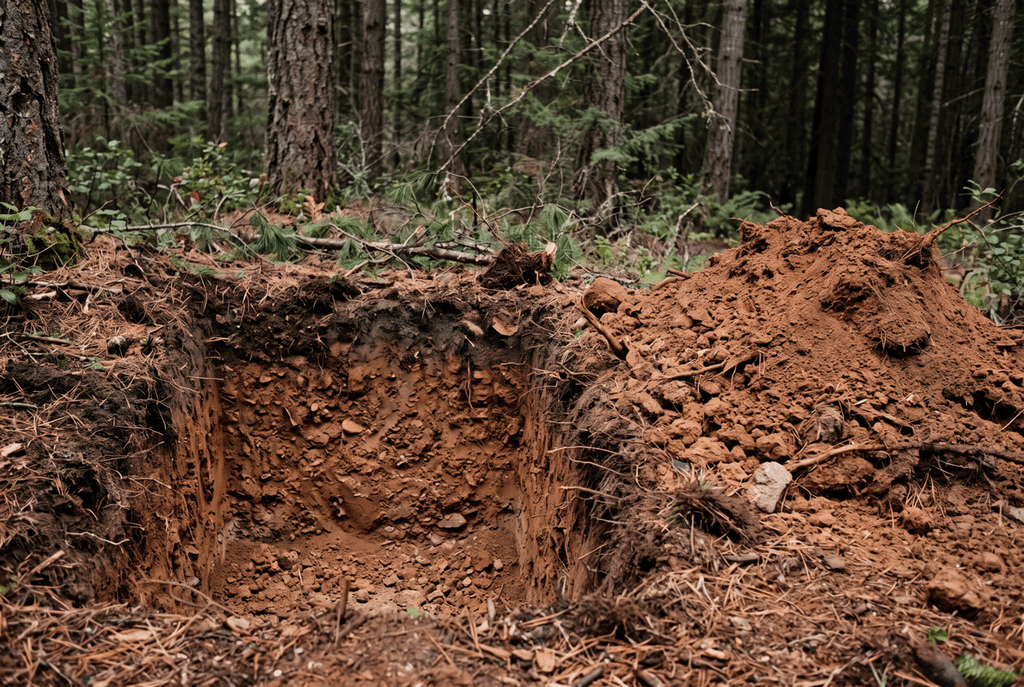
If your property isn’t served by a public sewer, and most rural parcels aren’t, you’ll need an on-site septic system. Before designing that system, you have to evaluate the soil. People often call this a “perc test,” though the process usually involves digging test holes and having the soil examined.
The results decide what kind of system the site can support and where it can go. Some soils allow a conventional system. Others need an engineered one that takes more planning and room.
It’s worth asking whether a parcel has already been evaluated. An existing approval can save a lot of time.
Water: Well, Shared Well, or Public Water
A house needs a reliable water source, and permitting offices generally want proof of it before they’ll sign off. Your options usually fall into three groups:
- A private well drilled on your property
- A shared well or small water system serving several parcels, usually governed by a written agreement
- A connection to a public or community water system, if one reaches your land
If you’re relying on a well, ask neighbors about their well depth and water quality, and look for well logs tied to the property. With a shared well, read the agreement closely. It should spell out maintenance and cost-sharing.
Well and water-rights rules differ between Washington and Idaho. In Washington, that’s the Department of Ecology. In Idaho, it’s the Idaho Department of Water Resources.
Power and Other Utilities
Power is easy to overlook on a pretty piece of land, and it can be one of the bigger site costs if the nearest service point is far away. Find out who provides electricity to the parcel. Around Spokane and North Idaho, that could be Avista, Inland Power & Light, or Kootenai Electric Cooperative, depending on location. Then call them early and ask what it would take to bring service to where the house will sit. Ask about internet coverage too, which varies a lot from one rural road to the next.
Access, Driveways, and Winter Roads
Look at how you get to the property, and how construction crews will. A few things to ask:
- Is the road county-maintained or private? If it’s private, is there a road maintenance agreement?
- Is there a recorded easement giving you legal access, not just a dirt track everyone happens to use?
- Can the driveway route handle heavy trucks, and does it meet fire district access requirements?
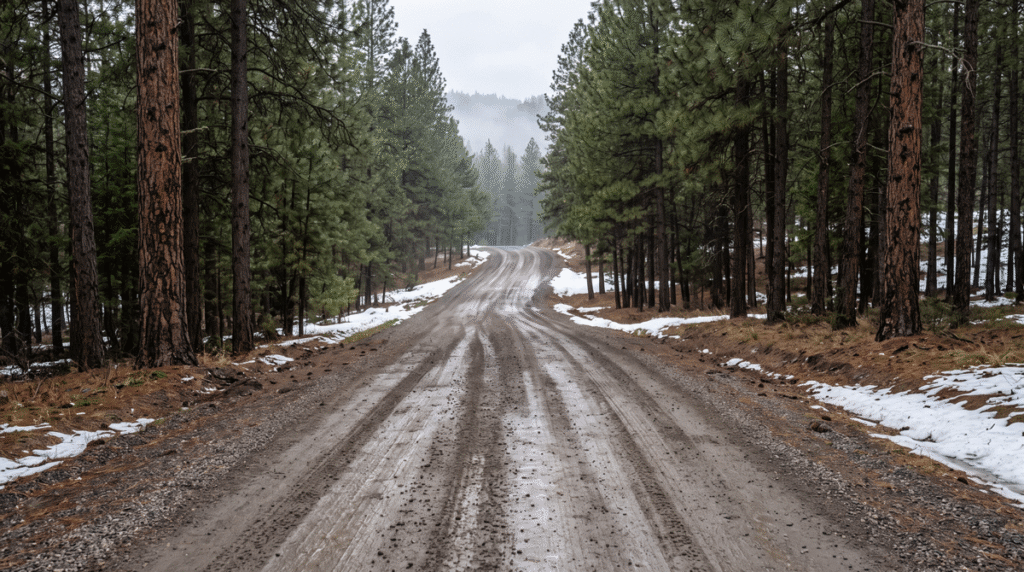
- What does the road look like in January, and again during spring breakup?
A long or steep driveway adds site work, and you’ll live with it every winter.
Slope, Drainage, and Where the House Can Sit
Walk the land during snowmelt or after heavy rain and watch where the water goes. Soggy low spots, seasonal streams, and steep grades all limit where a home, shop, and septic system can go.
Slope isn’t automatically a problem. A sloped lot can suit a walkout basement or a view-oriented design. It just needs planning from the start, and it may mean more excavation or engineering.
Zoning, Setbacks, and Easements
Zoning tells you what’s allowed on the land: minimum lot sizes, how many dwellings, and whether you can add an ADU, a shop, or outbuildings. Setbacks define how close you can build to property lines, roads, and sometimes water or steep slopes.
Easements and covenants rarely show up in a listing, but utility easements, shared access, and subdivision CC&Rs can all limit what you build. Read the title report before you close.
Spokane County vs. North Idaho: Who You’ll Be Dealing With
The Inland Northwest spans two states, and the rules change at the state line.
- Unincorporated Spokane County: Spokane County Building & Planning handles building permits, zoning, and setbacks. The Spokane Regional Health District handles septic.
- Inside city limits (like Deer Park): the city typically handles building permits and zoning, and the city’s own utility and sewer rules may apply.
- Kootenai County and North Idaho: unincorporated parcels go through Kootenai County Community Development (or the relevant county office elsewhere in the Panhandle). The Panhandle Health District handles septic.
Please call the right office before you buy. Staff can often tell you about past permits or known issues on a specific parcel.
Questions to Ask Before You Buy a Parcel
If you’re still shopping for land, these questions will save you trouble later. For a fuller list, our site-readiness checklist goes deeper.
- Has the land had a soil evaluation or septic approval? Can I see the paperwork?
- Is there an existing well, or do you have well logs from nearby properties?
- Where is the nearest power, and who provides it?
- Is legal access recorded, and who maintains the road?
- What’s the zoning, and are there CC&Rs?
- Are there wetlands, floodplain areas, or steep slopes on the property?
- What does the title report show for easements?
A seller who can’t answer isn’t a dealbreaker. It just means you find out before you commit.
Where a Builder Fits In
Many landowners wait to call a builder until they have plans. But the earlier a builder sees the land, the fewer surprises later.
At Elk Run Homes, building on the client’s land is the whole focus. Our company started when we built our own family home, and we learned firsthand how much the site shapes the rest of the project. When we walk a property with a landowner, we look at the same things covered above: where the septic can go, how the house should sit on the slope, how the driveway and utilities will reach it, and what that means for the design.
Better to learn what the land needs before you fall for a floor plan that doesn’t fit it.
Frequently Asked Questions
Do I need a perc test before building on land in Spokane County?
Yes, if the property won’t connect to the public sewer. You’ll need a soil evaluation and an approved septic design before building. In Spokane County, the Spokane Regional Health District handles that. In North Idaho, the Panhandle Health District handles it.
Can I build a house on land without a well?
Only if you have another approved water source, such as a shared well, a community water system, or a public water connection, permitting offices typically need proof of an adequate water supply before approving a new home, so plan your water source early.
Should I talk to a builder before I buy land?
Yes. A builder can walk the parcel with you and flag septic, access, slope, and utility issues before you commit. It costs far less to learn about a problem before closing than after.
How much does it cost to get raw land ready for a house?
It depends entirely on the site. The biggest factors are the septic system type, well drilling, the distance to power, driveway length and grade, and any excavation the slope requires. The only reliable number is a site-specific estimate after someone has actually looked at your land. Our custom home budget guide explains how site costs fit into the bigger picture.
Ready to Find Out What Your Land Can Support?
If you own land near Spokane, Deer Park, Coeur d’Alene, or elsewhere in North Idaho and you’re thinking about building, the best first step is a conversation about the site. Please tell us where your property is and what you’re hoping to build, and we’ll talk through what the land will need.
Schedule a consultation with Elk Run Homes to start planning your custom home on your land.